From Flashback to Fast Forward: FENDI 100
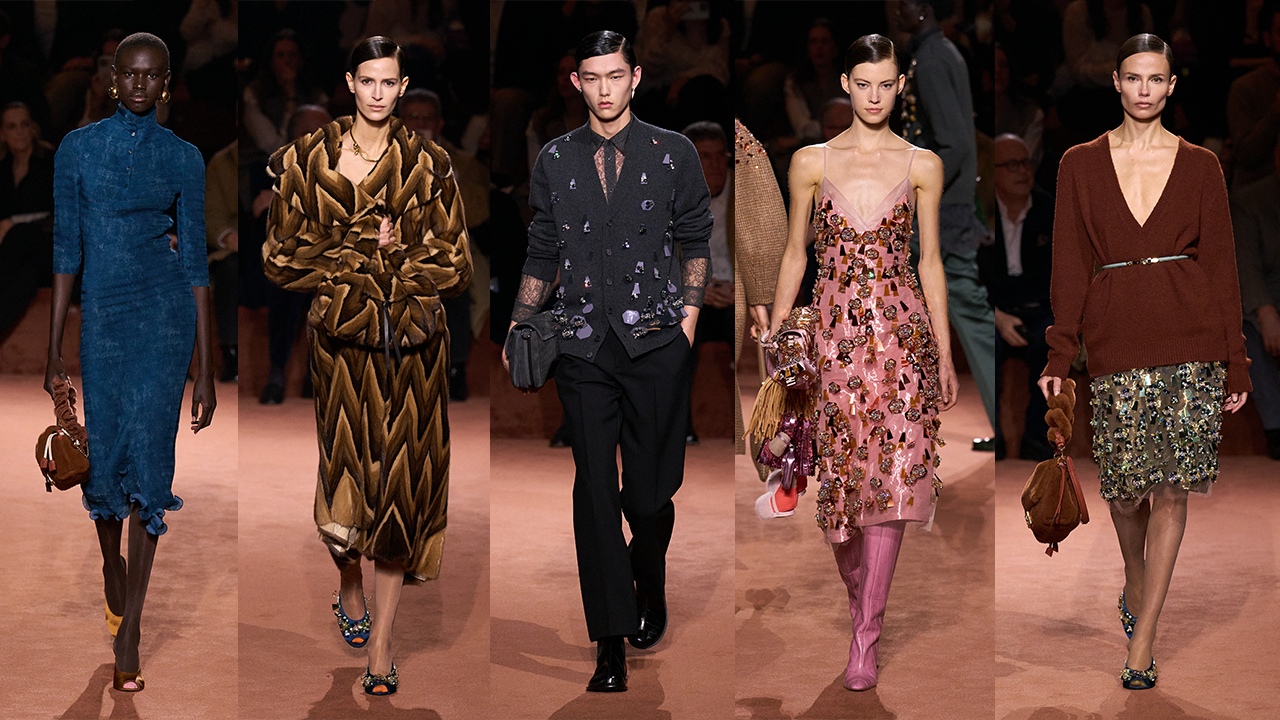
Fendi FW25 collection, presented during Milan Fashion Week, marked a historic event in the brand’s tradition: the Fendi Centenary. To celebrate the brand’s 100th anniversary, Silvia Venturini Fendi created a collection that not only honors the past but also confidently looks to the future.
Fendi 100 is not just a nostalgic tribute but an artistic expression that merges memory, innovation, and timeless fashion vision.
Silvia Venturini Fendi’s Vision
Silvia Venturini Fendi, the brand’s creative director, confidently stated: “I didn’t want to focus too much on physical archives. For me, Fendi 100 is more about my personal memories – real or imagined – of what Fendi was and what Fendi means today.” These words emphasize her philosophy: Fendi’s story is one of continuous evolution, rooted in its past but ever-looking forward. FW25 collection merges both memory and innovation, blending tradition with a modern perspective. Silvia breathed new life into Fendi’s essence, capturing what is called “Fendi-ness” through looks that reinterpreted iconic elements of the brand while maintaining a forward-thinking mindset.
Fendi was born in 1925 as a small workshop specializing in luxury bags and furs. Over the years, its identity has evolved, combining luxury, irony, and sensuality, always with a focus on quality and the artisanal tradition of Rome.
The Set: Fendi’s Historic Heart
Runway set beautifully recreated the historic salons of Via Borgognona, Fendi’s headquarters in Rome. This is the place where the five Fendi sisters – Alda, Anna, Carla, Franca, and Paola – spent their childhood, combining play with work, and laying the foundations for Fendi’s future. The boutique, which during the day hosted high-end clients, transformed at night into a haven for the Cinecittà jet-set, where secrets, stories, and memories were passed down through the generations.
Entrance to the show featured a faithful reproduction of the iconic entrance gate, this time with an automated opening mechanism, symbolizing the transition from past to future. The venue’s orange carpet created islands for guests to sit upon, while the side walls and columns were adorned with mirrors, offering a reflective visual effect that bridged past, present, and future of the Fendi brand.
Fendi BFF: Characters and Iconic Looks
An innovative element of the show was the concept of Fendi BFF. The collection seamlessly blended the Women’sand Men’s lines, where clothing became its own character, and vice versa. Fendi BFF was symbolized through garments made of recycled fabrics, embracing both sustainability and luxury, showing Fendi’s commitment to eco-consciousness. Furthermore, oversized charms, inspired by the runway looks, made a stunning appearance. These charms were a major commercial success, selling out rapidly, highlighting their future potential as collectiblescelebrating Fendi’s centennial.
The Fendi FW25 Looks
The Fendi 100 collection opened symbolically with Silvia Venturini Fendi’s grandchildren, Dardo and Tazio, children of Delfina Delettrez Fendi and Nico Vascellari, wearing the same outfits Karl Lagerfeld designed for a 1968 campaign. This was not a coincidence: in 1968, Silvia herself, at only six years old, had posed for a similar campaign, marking the beginning of the family’s deep-rooted connection to the Fendi house. The children symbolically opened the gate that represents the link between past and future.
The music, curated by Michel Gaubert, played a crucial role in setting the atmosphere for the show. Tracks such as Never, Never Gonna Give Ya Up by Barry White, along with vocals by Ornella Vanoni, Mina, Patty Pravo, and Franco Battiato, brought depth and character to the visual storytelling of timeless fashion. Every song added another layer to the narrative of a fashion brand that will never lose its relevance.
Looks featured in the collection explored new dimensions. The show began with a dramatic bell-shaped fur coat, worn as a dress. This iconic opening look was a statement of how Fendi continues to innovate traditional materials like fur, adapting them to modern sensibilities. Final look was a delicate slip dress with intricate lace details, transparencies, and bidimensional patterns, celebrating the timeless beauty and glamour of Rome.
Supermodels and The Show’s Cast
Another standout feature of the Fendi FW25 show was the presence of legendary supermodels. From Penelope Treeand Deva Cassel to Adriana Lima, Natasha Poly, Eva Herzigova, Yasmin Le Bon, Karen Elson, Doutzen Kroes, Paloma Elsesser, Angelina Kendall, and Amelia Gray, the runway was filled with faces that embody Fendi’s timeless allure.
These models represented the brand’s enduring elegance, bringing the collection to life in a moment that exuded sophistication and femininity.
Fendi’s Evolving Fashion Codes
The women’s looks in the FW25 collection are a reinterpretation of femininity’s codes, while the men’s looks reflect a revision of traditional masculine attitudes. Silvia Venturini Fendi reintroduced the craftsmanship of fur, one of Fendi’smost iconic materials, but with a modern twist.
Today, fur has been reimagined using sheepskin and intricate techniques like honeycomb intarsia and patchwork, recalling the luxurious textures of fox, mink, and sable, but in an ethical and contemporary way. This transformation shows how the brand continues to innovate while staying grounded in its roots.
Fendi’s Future
Silvia Venturini Fendi, now the sole head of Fendi’s fashion after Kim Jones’ departure last autumn, has created a collection that is not nostalgic but forward-looking.
With the 100 logo, symbolized by two inverted zeros, she conveyed the concept of infinity. This reflects her vision for the brand: past and future are cyclical and merge into an eternal, unbroken circle.
This vision is a reflection of Fendi’s future.
Family and Made in Italy
Fendi’s story is not just a tale of fashion; it’s a family story. Much like many other Italian brands, Fendi was built upon a foundation of artisanal craftsmanship passed down through generations. These small family-run workshopshave achieved global success, becoming beloved by fashion lovers worldwide.
Unfortunately, in Italy, these traditional craftsmen’s workshops are disappearing. In this centenary year, Fendi celebrates the legacy of craftsmanship and invites future generations to open more doors to this artisanal heritage. The Made in Italy philosophy isn’t just about producing high-quality goods; it’s about maintaining a strong connection to family tradition and artisanal excellence, values that Fendi has upheld for a century.
As the Made in Italy label continues to symbolize craftsmanship, innovation, and luxury, Fendi remains one of the last brands to hold firm to its family roots while pushing the boundaries of modern fashion. The centennial of Fendi is more than just a celebration of the past; it’s a visionary journey into the future of Italian fashion.