The Debut of Maria Grazia Chiuri: A Return to Rome, A Return to Essence
At Milan Fashion Week, the hottest tickets were undoubtedly for Fendi and Gucci. Two iconic maisons, two high-stakes debuts, and two strategies that perfectly reflect the current moment in fashion. It’s the great game of creative chairs, a spectacle where the real goal is capturing global attention. And on this front, Fendi FW26 delivers.
With this collection, Maria Grazia Chiuri returns to her roots. After leading Valentino and later Dior, she sits once again in the creative seat at Fendi, the house where she began her career working alongside the legendary Fendi sisters for twelve years.
It is a return to Rome, a return to the origins of the brand—but also a complex challenge: to carry forward the monumental legacy of Karl Lagerfeld without being overshadowed.
The Scenography: “Less Me, More Us”
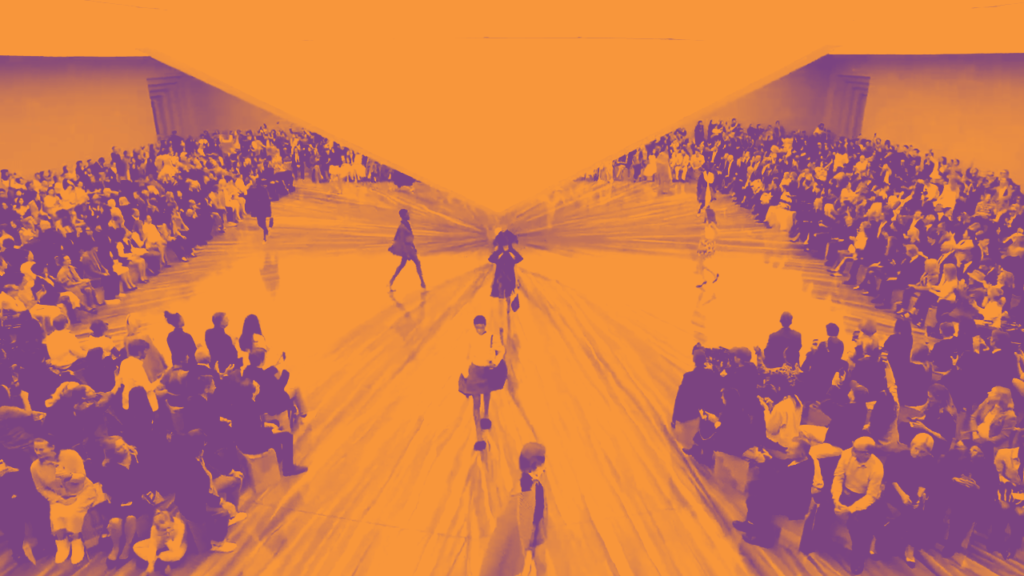
The runway setup is intentionally minimalistic. Rows of bare lamps hang from the ceiling like disciplined soldiers, directing attention solely to the clothes. On the floor, a bold statement reads: “Meno io / Più noi” (“Less Me, More Us”).
It is a manifesto—or at least it aspires to be one.
Chiuri emphasizes teamwork, method, and shared craftsmanship. She recalls that during her early years at Fendi in the 1990s, she learned the value of collaborative work and direct dialogue with ateliers and producers. Today, that ethos resurfaces as central to her vision. Yet the question lingers: does this collection truly embody the “us” it champions?
The New Logo: Roman Modernism
Chiuri’s first tangible intervention is the reimagining of Fendi’s logo. In collaboration with graphic designer Leonardo Sonnoli, she redefines the logotype, drawing inspiration from the original proportions and the classical alphabet of the Trajan Column.
This is not a loud revolution—it is a measured return to the maison’s modernist roots. The operation is almost archaeological, reaffirming Fendi as a deeply Roman house with cultural and graphical solidity that predates any fleeting trend.
In a fashion era where new creative directors often overhaul branding completely, Chiuri opts for continuity reinterpreted.
Furs Reimagined: From Controversial to Eternal
Fendi’s signature remains fur, a historically central yet contentious material. Chiuri approaches it without ideological erasure: she doesn’t remove, she transforms.
The Rome atelier becomes a hub for remodelling. Old furs—even from other brands—can be dismantled, reconstructed, and lightened, treated as haute couture pieces designed to endure. This is luxury upcycling, turning fur from a symbol of excess into a statement of longevity and artisanal craft.
On the runway, furs appear lighter and more wearable. Lightness emerges as a defining keyword for this collection.
Among the accessories, the embroidered “Five Sisters” shoes pay tribute to the five Fendi sisters, crafted in upcycled fur in collaboration with Sagg Napoli, a longtime partner of Chiuri from her Dior years.
Ready-to-Wear: Precision and Fluidity
Chiuri approaches ready-to-wear with a fluid methodology, blurring traditional gender lines without making a loud political statement. Her focus is on the garment, its materiality, and its construction.
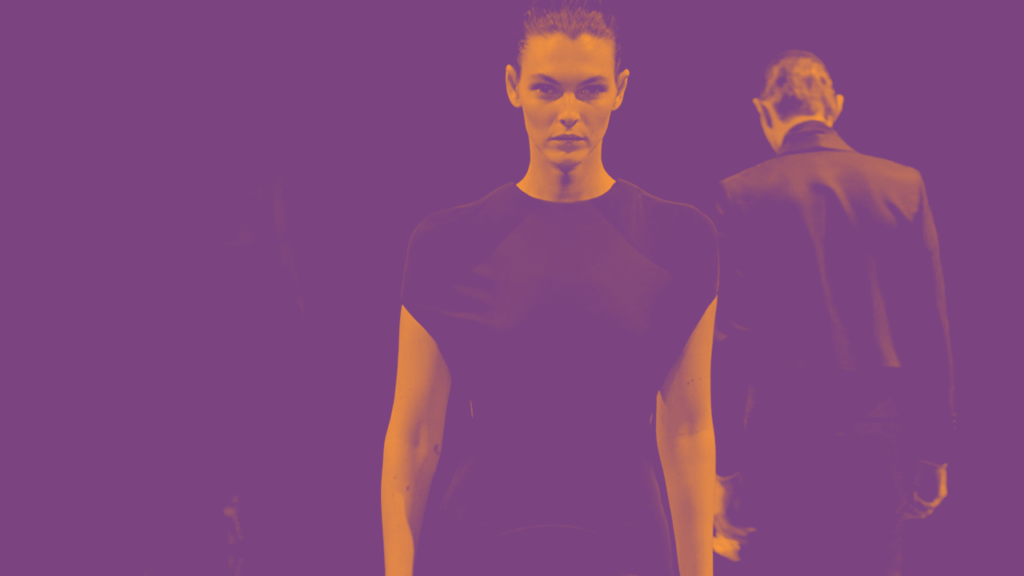
Outerwear remains central. Structured jackets, often double-breasted, define the waist or layer over long dresses. The female wardrobe is rigorous, almost austere, engaging in constant dialogue with masculine references.
Fine knits, delicate lace, and subtle leather dominate. Collars—chemisier style, occasionally reimagined as chokers—serve as explicit nods to Karl Lagerfeld, transforming into both accessories and objects of desire.
Menswear: Street, Biker, and Workwear
For menswear, Chiuri embraces a more relaxed, street-oriented approach. Biker jackets, sporty silhouettes, and industrial workwear—sometimes paired with towering heels—create a dynamic tension.
The collection thrives on contrasts: minimalistic coats and garments meet bold, commercial-ready it-bags. Formal restraint meets iconic product visibility, reflecting Fendi’s balance between innovation and market strategy.
Craftsmanship as Operational Method
Chiuri repeatedly underscores the importance of skilled craftsmanship. Collaborations with producers, including longtime Indian embroiderers, are not marketing rhetoric—they are integral to the creative process.
The artisan is not romanticized; they are an essential part of the team. This method, inherited from the Fendi sisters, remains a cornerstone of the new Fendi.
Yet, watching the runway, the collective vision promised in the campaign feels more conceptual than realized.
Sound and Symbolism
The runway soundtrack features Rosalía, whose voice sets the mood and hints at potential future collaborations. In today’s fashion ecosystem, where music, culture, and marketing converge, every detail counts.
Front-row attendees Monica Bellucci and Valeria Golino embody a sophisticated Roman elegance, perfectly complementing Chiuri’s vision for this new chapter of the maison.
A Controlled Debut
Overall, Fendi FW26 feels more like consolidation than provocation. Key elements are already evident: centrality of outerwear, lighter furs, strict femininity, statement accessories, and merchandise poised to fill boutiques.
Compared to the high expectations surrounding Chiuri’s return, the debut is cautious. It is not a declaration of shock but a process of sedimentation. Rather than asserting ego, it builds a foundation for the brand’s next chapter.
“Less Me, More Us”: Promise or Question Mark?
The phrase on the runway remains the defining image of this debut. “Meno io, più noi” aims to position the collection as a collective project.
Yet, for now, the “us” feels intangible. Perhaps it is merely the starting point. In today’s immediate, media-driven fashion system, the time to build is limited.
The path for the new Fendi is mapped. Now the challenge is to transform this quiet revolution into a truly shared identity.